
Get it Fixed!
We offer same-day or next-day appliance repair of all major brands. For the fastest reply, call us at 727-510-3524.
Get it Fixed!
We offer same-day or next-day appliance repair of all major brands. For the fastest reply, call us at 727-510-3524.

Lint is so common in laundry rooms that many homeowners barely notice it. A few gray fibers on the lint screen seem harmless, and a dusting of fluff behind the dryer looks like a minor housekeeping issue. However, dryer lint buildup is highly combustible, and usually in places most people never see. When dryers run with restricted airflow, heat has nowhere to go, and that combination can start a fire. Because the warning signs are easy to overlook, lint buildup is often called a silent fire hazard. This guide explains how lint accumulates, where it hides, why it ignites, how to recognize danger signs, what you can safely check, and when to call a professional.
For a deeper look at the ductwork that carries lint outside your home, see our article on Dryer Vent Cleaning: How Clogged Vents Cause Dryer Problems. For official fire safety guidance, the U.S. Fire Administration offers helpful resources at usfa.fema.gov.
Every time a dryer tumbles wet clothing, friction releases tiny fibers from cotton, polyester, towels, and blankets. Heat and airflow carry these fibers toward the exhaust. Although the lint screen catches the larger pieces, finer particles pass through the mesh and continue into the dryer cabinet and vent system.
Several factors increase lint production:
Moreover, the lint screen itself is not a complete barrier. Fine fibers slip through its openings, settle on internal surfaces, and gradually accumulate. Consequently, a dryer can look clean from the front while lint builds up in hidden areas behind the drum, around the heating element, and inside the exhaust duct.
The most dangerous lint is often the lint you cannot see. Several areas tend to collect buildup over time.
The space between the drum and the rear panel is a common collection point. Lint drifts into this area and sticks to the blower, heating components, and wiring. Because this space is enclosed, lint can accumulate for months without anyone noticing.
Gas and electric dryers both include heating components that become very hot during operation. Lint that touches these surfaces can scorch, smolder, or ignite. Even a thin layer can act as insulation and cause components to overheat.
Lint that passes the screen travels through the exhaust duct and toward the outside. Bends, joints, and long duct runs create places where lint can stick. Over time, these deposits narrow the passage and reduce airflow substantially.
The vent hood outside your home can collect lint, debris, and even bird nests. A blocked exterior flap restricts airflow and traps heat inside the duct. Checking the exterior hood is one of the simplest ways to detect a problem.
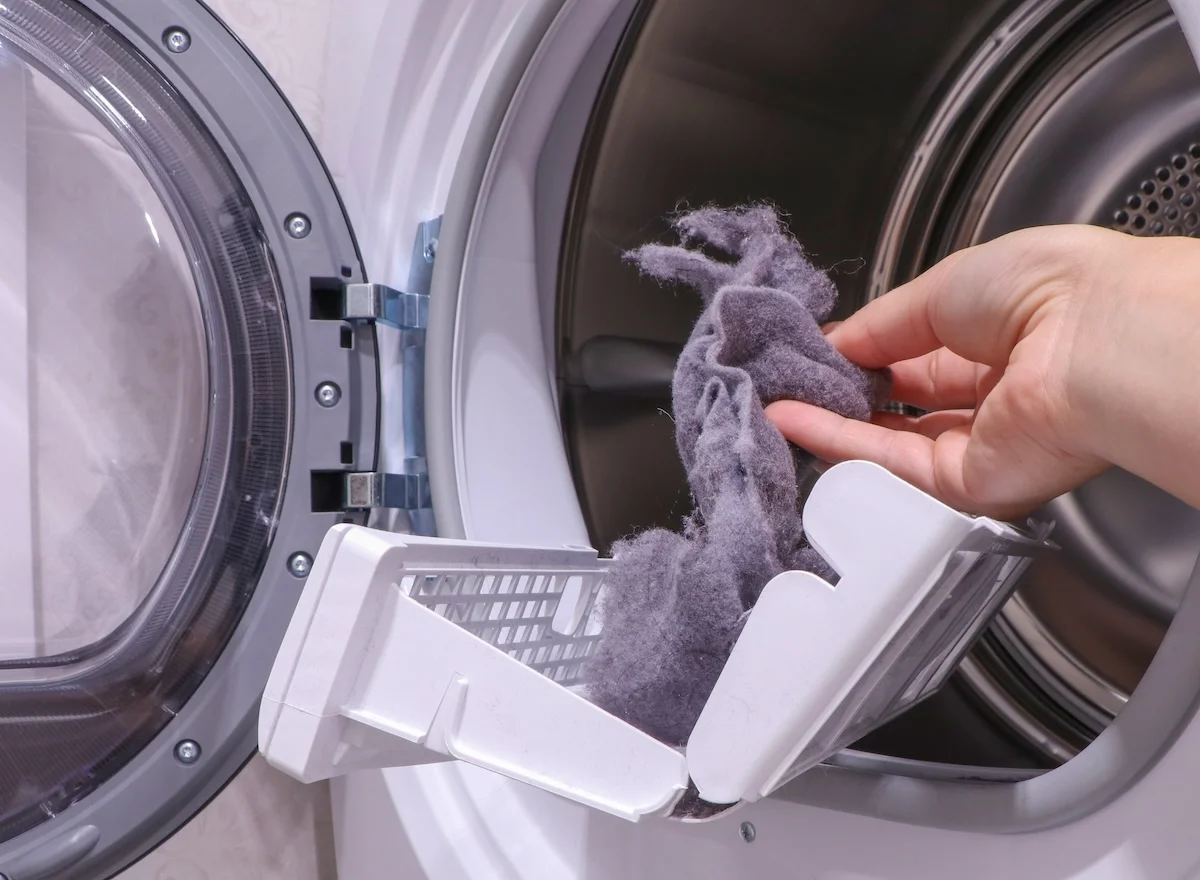
Lint is made of dry, fine fibers with a large surface area. This combination allows it to ignite quickly when exposed to heat. A dryer generates significant heat to evaporate moisture from clothing. Under normal conditions, that heat is carried away by airflow. When airflow is restricted, temperatures inside the dryer can rise beyond their intended range.
The ignition process typically unfolds in a predictable sequence:
Furthermore, a fire inside a dryer can be difficult to detect because it often starts out of sight. By the time smoke or flames become obvious, the fire may have spread into the vent system or the wall cavity.
Dryers rarely fail without warning, but the signs can be subtle. Many homeowners attribute them to aging appliances rather than a fire hazard.
Performance changes:
Heat and smell changes:
Physical signs:
Any of these signs deserves prompt attention. Combined symptoms, such as a burning smell with slow drying, are especially serious.
Some lint hazards can be reduced with simple maintenance. These steps are safe for most homeowners, provided the dryer is unplugged or the breaker is turned off before inspection.
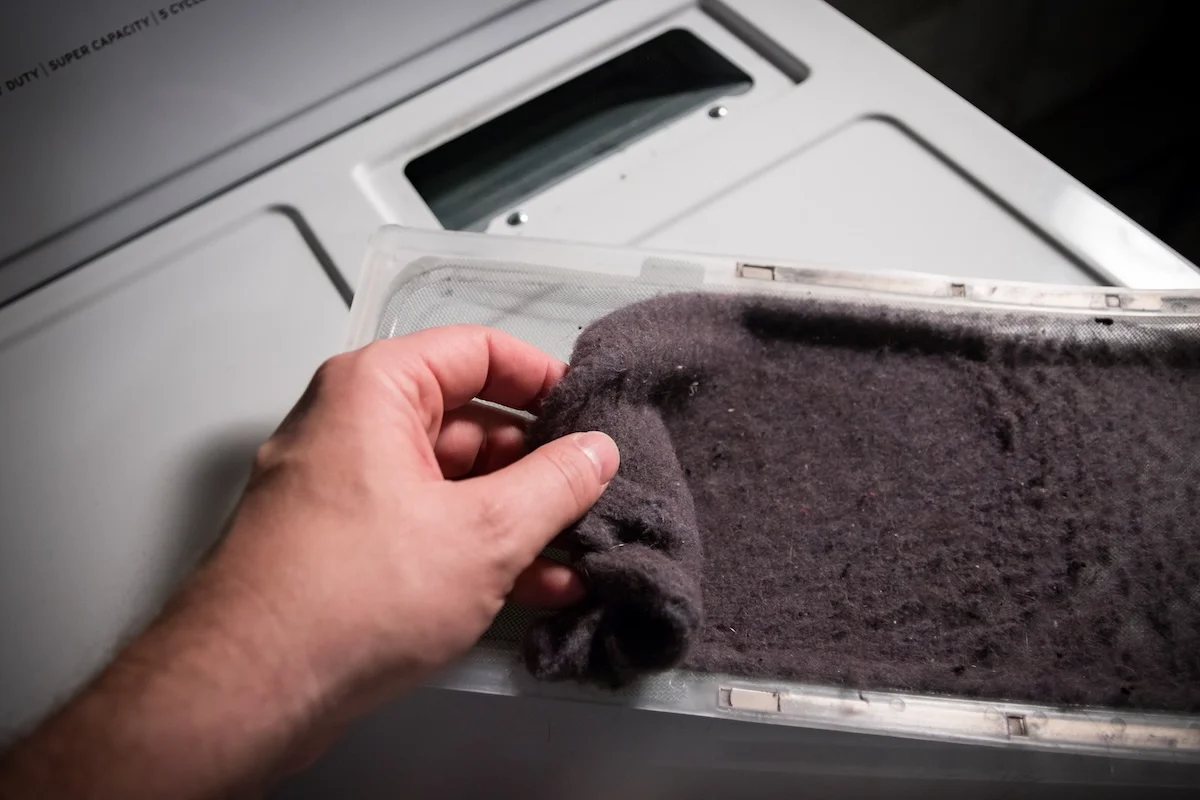
Remove lint from the screen before each cycle, even if the screen looks clean. Use your fingers to peel away the buildup, then wipe the screen with a dry cloth if needed. Never run the dryer without the screen in place.
Once a month, use the crevice tool of a vacuum to clean the area around the lint screen. Remove any fibers that have collected in the housing or along the seal. Dryer sheets and fabric softener can leave residue that traps lint, so wipe the housing with a damp cloth if residue appears.
With the dryer unplugged, access the area around the drum according to the owner’s manual. Use a vacuum with a long, narrow attachment to remove loose lint from accessible surfaces. Do not attempt to remove internal components or heating elements yourself.
Go outside while the dryer is running and confirm that the flap opens and air flows out. Remove any lint or debris from the vent hood. Check the vent periodically for birds or insects that may have nested inside.
With the dryer unplugged, look for melted plastic, scorched outlets, or loose connections. Damaged electrical components can produce heat and contribute to fire risk.
Many lint-related dangers cannot be fully addressed with household tools. Contact a qualified technician or a professional vent cleaning service if you notice any of the following:
Professional technicians can inspect the full length of the vent system, clean internal components safely, verify airflow, and identify installation problems that cause repeated buildup. They also test the dryer’s safety features and confirm that heating components are functioning correctly.
Prevention is the most effective defense against lint fires. The following habits reduce risk substantially:
Moreover, keep the area around the dryer clear. Stored boxes, cleaning supplies, and laundry baskets should not sit against the dryer or block the exhaust.
Older dryers accumulate lint more quickly because their internal components wear, seals loosen, and ductwork ages. Frequent overheating, repeated shutoffs, or repeated lint buildup may signal that a dryer needs significant repair or replacement. A technician can evaluate the unit’s condition, the cost of repairs, and the safety implications before making a recommendation. When the appliance is unsafe, replacement is often the wiser choice.
If you see flames or smell smoke, act immediately. Turn off the dryer and the breaker if you can do so safely. Leave the home and call emergency services from a safe location. Never try to fight a fire in a dryer if flames are spreading, and never reopen a dryer that has been smoking until a professional has inspected it.
Dryer lint buildup is a quiet but serious danger. It forms behind the drum, around the heating element, inside the exhaust duct, and at the exterior vent, where it restricts airflow and allows heat to build. Warning signs such as slow drying, excess heat, and burning smells are easy to dismiss, but they should prompt action. Cleaning the lint screen before every load, vacuuming the housing, checking the exterior vent, and scheduling professional vent cleaning reduce the risk substantially.
At Gulf Coast Appliances, our certified technicians inspect dryers and vent systems, clean lint from hidden areas, and identify the safety issues that homeowners often miss. If your dryer runs hot, dries slowly, or shows any warning sign, contact Gulf Coast Appliances today to schedule an inspection and protect your home from a silent fire hazard.