
Get it Fixed!
We offer same-day or next-day appliance repair of all major brands. For the fastest reply, call us at 727-510-3524.
Get it Fixed!
We offer same-day or next-day appliance repair of all major brands. For the fastest reply, call us at 727-510-3524.
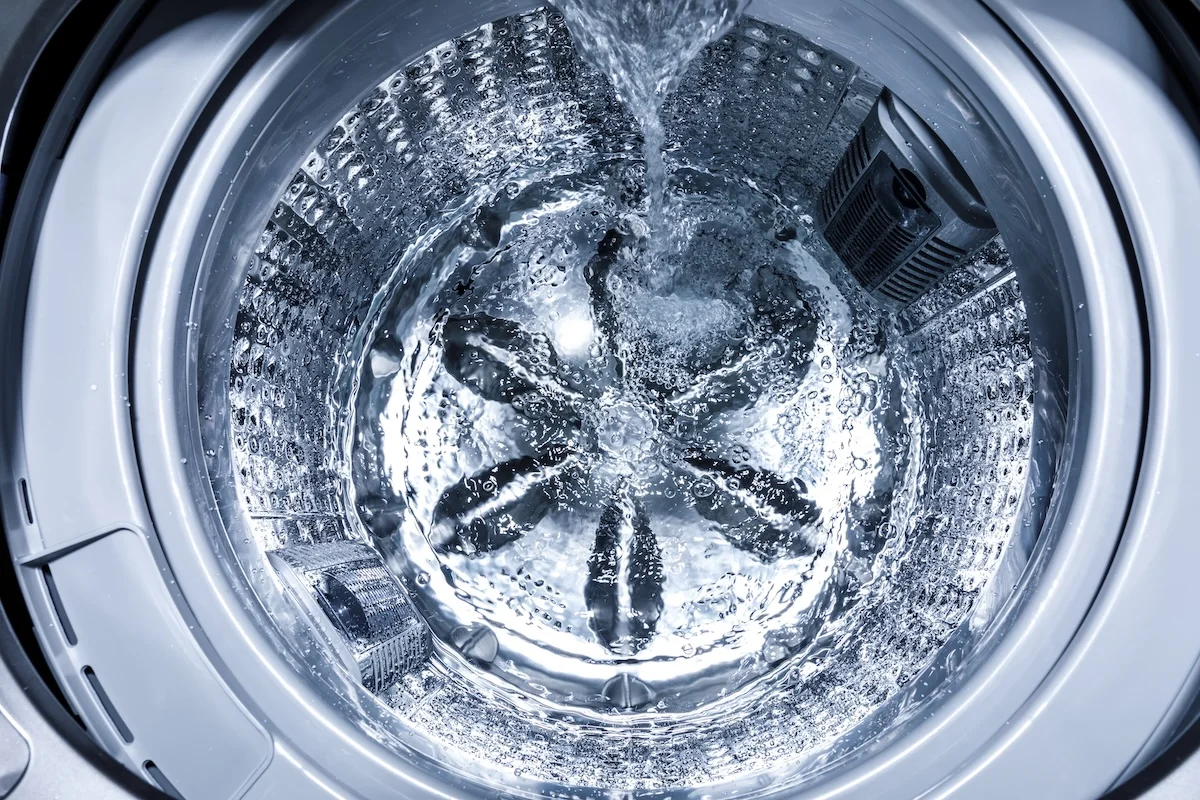
You load the washer, run a full cycle, and pull out clothes that should smell fresh. Instead, they carry a sour, musty, or sewage-like odor. Many homeowners assume the problem is mold, and mold is a common cause. However, the smell coming from your washer may also come from bacteria, detergent residue, trapped debris, or a drain system that never fully empties. Moreover, these causes often overlap, which makes the odor frustrating to solve. Understanding what produces the washing machine smell helps you clean the right areas and decide when professional service is needed. This guide explains the bacteria and residue behind washer odors, how to identify their sources, safe cleaning steps, and prevention strategies. For a detailed look at visible fungal growth, see our article on Washing Machine Mold and Mildew: How to Clean and Prevent Growth. For general guidance on keeping laundry appliances in good condition, the U.S. Department of Energy offers useful information at energy.gov.
A washing machine is designed to clean clothes, but it also creates a warm, damp environment where microorganisms thrive. Each cycle introduces water, soil, skin cells, lint, and detergent into the drum and tub. Some of that material washes away, while the rest collects in places that stay wet long after the cycle ends. Consequently, bacteria and fungi multiply, and their byproducts produce the odors you notice.
Several conditions encourage this growth:
Furthermore, the washing machine smell often becomes stronger as the washer ages. Components wear, seals develop small crevices, and buildup accumulates in areas that are difficult to reach. Therefore, an odor that appears gradually usually reflects a problem that has been developing for months.
Many people use the words “mold” and “bacteria” interchangeably, but they are different organisms. Mold is a fungus that forms visible colonies, often black, gray, or green. Bacteria are microscopic single-celled organisms that multiply rapidly in moist environments. Both can produce strong odors, and both often exist in the same location.
Bacterial growth tends to produce these signs:
Mold growth, by contrast, usually produces a musty or earthy smell, along with visible spots or streaks. Because the two often appear together, a thorough cleaning addresses both. However, identifying the dominant problem helps you focus your efforts on the most affected areas.
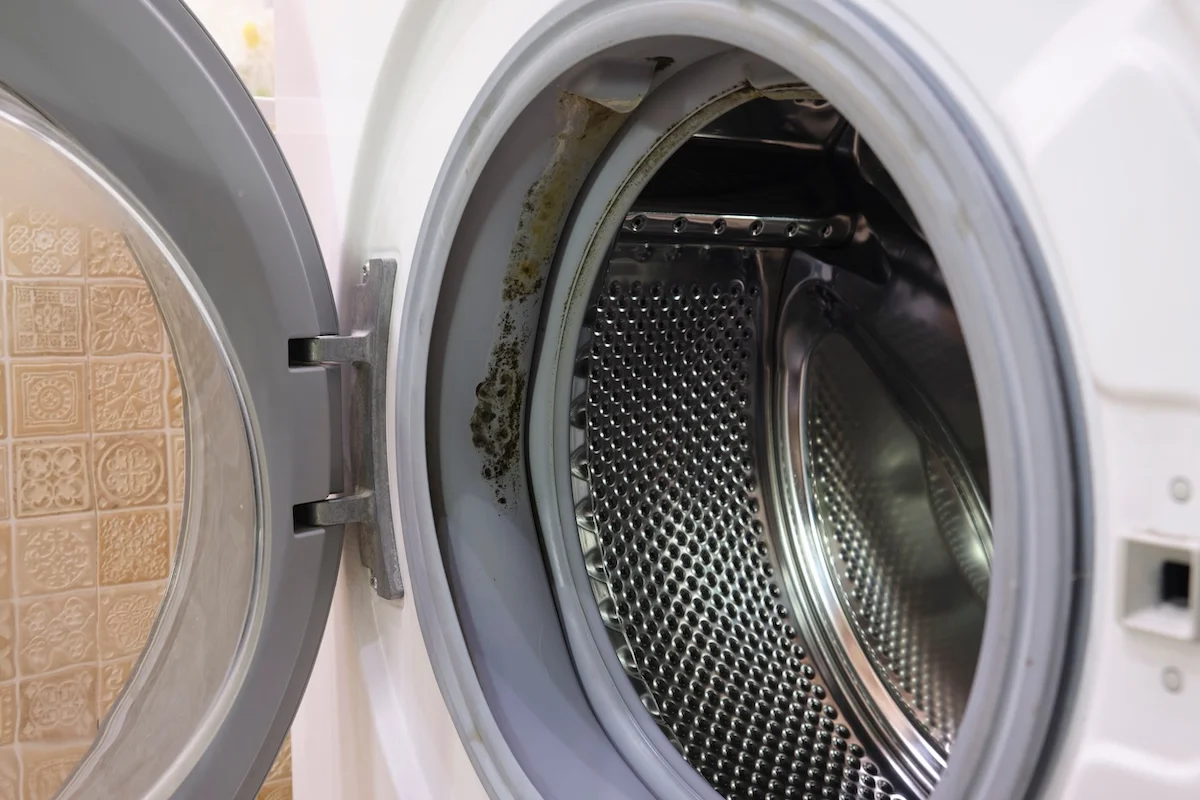
Odors do not come from a single place. Instead, several components can contribute, and each requires a different approach.
The rubber gasket around the door is one of the most common sources of odor. It folds over itself and traps water, lint, and detergent in its creases. Because the door often stays closed after a cycle, moisture remains inside the seal. Bacteria and mold thrive in these folds, which is why many front-load owners notice smells that seem to come from the washer itself.
Dispenser drawers collect detergent and fabric softener that never fully rinses away. Over time, this residue hardens into a sticky film that supports microbial growth. Liquid fabric softener is especially problematic because it coats surfaces and interferes with the rinse action.
The inside of the drum and the outer tub can collect a film of soap scum, minerals, and fabric fibers. This layer holds moisture and nutrients, allowing bacteria to multiply. Top-load washers may also develop buildup under the agitator, where water and debris accumulate.
Most washers include a drain pump filter that catches lint, coins, and small objects. If the filter is not cleaned regularly, debris rots in standing water. This is one of the most overlooked sources of foul odor, and it often produces a smell that seems to come from the floor drain rather than the machine.
Drain hoses can trap residue along their length, particularly where they bend. Wastewater that sits in the hose between cycles can develop odors that move back toward the washer. A sewer-like smell near the standpipe may point to a drainage problem rather than a cleaning issue.
Sometimes the washer is not the source at all. Wet clothes left in the drum for hours can develop odors that transfer to fresh items. Likewise, damp towels and cloth items may carry bacteria from body oils and sweat. Although this does not produce a machine smell, it can make laundry seem as though the washer is responsible.
Before cleaning, it helps to determine where the washing machine smell is strongest. Simple observation can save time and prevent unnecessary work.
Open the door and smell the gasket, the dispenser drawer, the drum, and the area around the drain filter. Compare the odors. The strongest source is often the best starting point for cleaning.
Place towels around the base of the washer, then remove the drain filter following the owner’s manual. Remove any debris, rinse the filter, and check whether water drains freely. Be prepared for water to flow out, and avoid overtightening when reinstalling the filter.
Pull back the folds of the gasket and look for pink residue, black spots, or trapped lint. Gently run a finger through the seal to feel for slime or grit. Dry the area thoroughly after inspection.
With the washer unplugged and the water supply turned off, inspect the drain hose for kinks, cracks, or residue. Confirm that the hose is securely connected to the standpipe and that it does not sit below the water level inside the washer.
Once you have identified the likely sources, a thorough cleaning helps eliminate both bacteria and residue. Always consult the owner’s manual before using any product, since some manufacturers recommend specific cleaners.
Run an empty cycle on the hottest, longest setting available. Add a washing machine cleaner designed for this purpose, or use a product recommended by the manufacturer. Some homeowners use white vinegar or baking soda in place of commercial cleaners, but these may not be effective against every type of buildup. Never mix bleach with vinegar or other cleaning products, because the combination can release hazardous fumes.
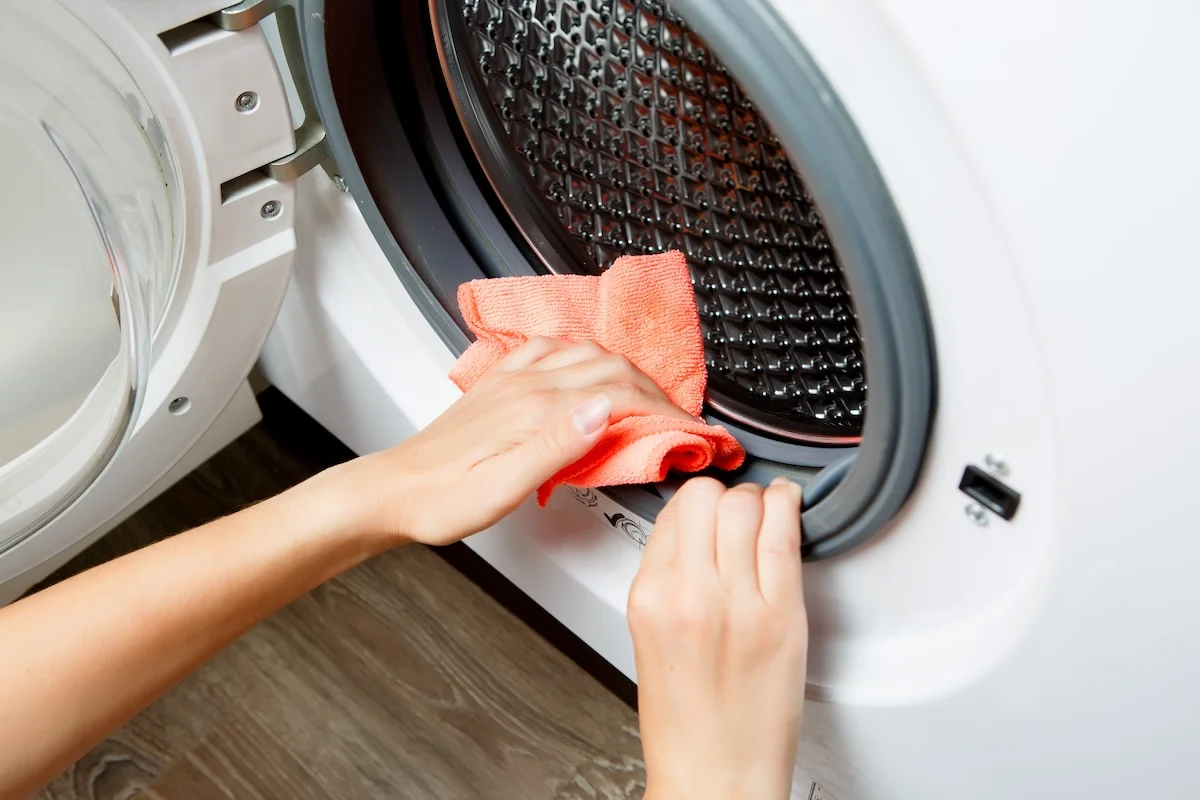
After the cycle, wipe the door gasket, dispenser drawer, and interior surfaces with a clean cloth and mild dish soap. Remove the dispenser drawer if possible and soak it in warm water. Scrub gently with a soft brush to remove residue from crevices.
Remove and rinse the drain filter after every few months, or more often if you notice lint buildup. Clean the filter housing as well, using a damp cloth or small brush.
After cleaning, leave the door and dispenser drawer open for several hours. Air circulation is essential for preventing regrowth, and a dry interior is far less hospitable to bacteria.
If the odor persists after one cleaning cycle, repeat the process. Stubborn residue sometimes requires several rounds, particularly when the washer has been neglected for a long time.
Consistent habits make the biggest difference. Most washer odors return because moisture and residue are left behind after each load.
After every load:
Weekly:
Monthly:
Good laundry practices:
Moreover, consider running an occasional warm or hot cycle with laundry rather than cold cycles only. Warmer water can help dissolve detergent residue, although the appropriate temperature depends on the fabric and the manufacturer’s guidance.
Some odor problems go beyond routine cleaning. Contact a qualified technician if you notice any of the following:
Persistent odors can signal a drain blockage, a damaged seal, or a pump problem. Technicians can inspect internal components, test drainage, and determine whether a repair or replacement is more practical. Professional service also helps when the washer is older and cleaning no longer restores its performance.
Lingering odors are more than unpleasant. Bacteria and mold can transfer to clothing and bedding, and some household members may be more sensitive to them than others. People with asthma, allergies, or compromised immune systems may react to mold and bacterial byproducts. Clean laundry should smell clean, so a persistent odor deserves attention. If you notice skin irritation or respiratory symptoms that seem connected to laundry, consult a healthcare provider.
If there’s a washing machine smell after every load, then it is signaling a buildup problem. Bacteria, mold, detergent residue, trapped lint, and drainage issues can all contribute, often at the same time. By identifying the likely source, cleaning thoroughly, leaving the door open, and maintaining regular habits, you can restore fresh results and prevent the odor from returning. When the smell persists or is accompanied by drainage problems, professional inspection protects your laundry and your home.
At Gulf Coast Appliances, our certified technicians diagnose washer odors at the source, inspect drains and seals, and recommend cleaning and repair options that fit your machine. If your washer smells no matter how often you clean it, contact Gulf Coast Appliances today to schedule a thorough inspection and get your laundry back to smelling fresh.