Get it Fixed!
We offer same-day or next-day appliance repair of all major brands. For the fastest reply, call us at 727-510-3524.
Get it Fixed!
We offer same-day or next-day appliance repair of all major brands. For the fastest reply, call us at 727-510-3524.
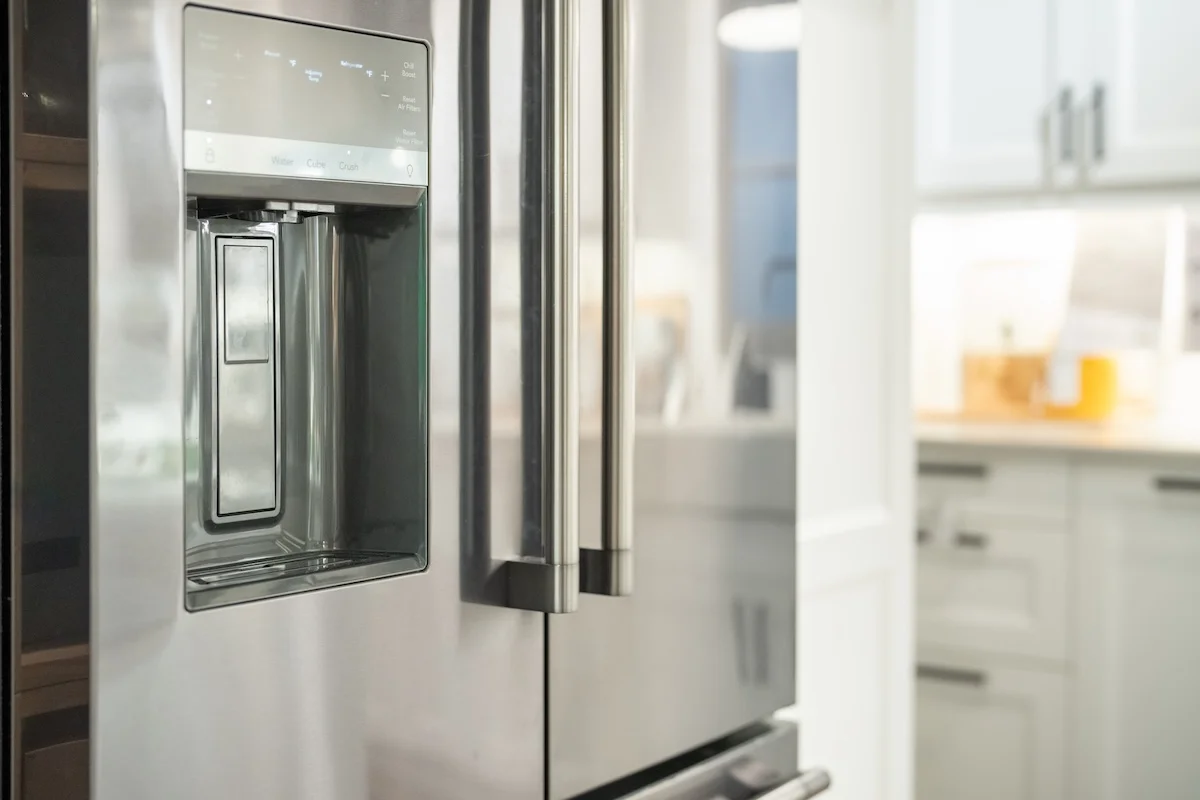
There are few things more frustrating than opening the freezer and finding an empty ice bin. Your refrigerator’s ice maker depends on a steady supply of water, and when that supply stops, ice production stops with it. Moreover, many homeowners assume the ice maker itself has failed, when the real culprit is often a water line or water valve. Understanding how these components work together helps you identify the problem faster and decide what you can safely check yourself. This guide explains the most common water line and valve problems, how to recognize their symptoms, what safe steps you can take, and when to call a professional if you run into an ice maker not working. For related guidance, see our article on Refrigerator Water Leak Repair: Why Water Is Pooling Under Your Fridge. For general information on refrigerator operation and efficiency, the U.S. Department of Energy offers helpful resources at energy.gov.
Before diagnosing a problem, it helps to understand the water path. Most refrigerators with automatic ice makers draw water from the household supply through a small copper or plastic tube. This tube connects to a water valve, usually located at the back of the refrigerator or behind a lower access panel. From there, water travels through a filter, into a fill tube, and finally into the ice maker’s mold.
Each part of this path can fail independently. Consequently, an ice maker that produces no ice may be suffering from a simple blockage, a damaged tube, a failed valve, or an electrical problem. Recognizing the water path allows you to narrow the possibilities quickly.
The main components include:
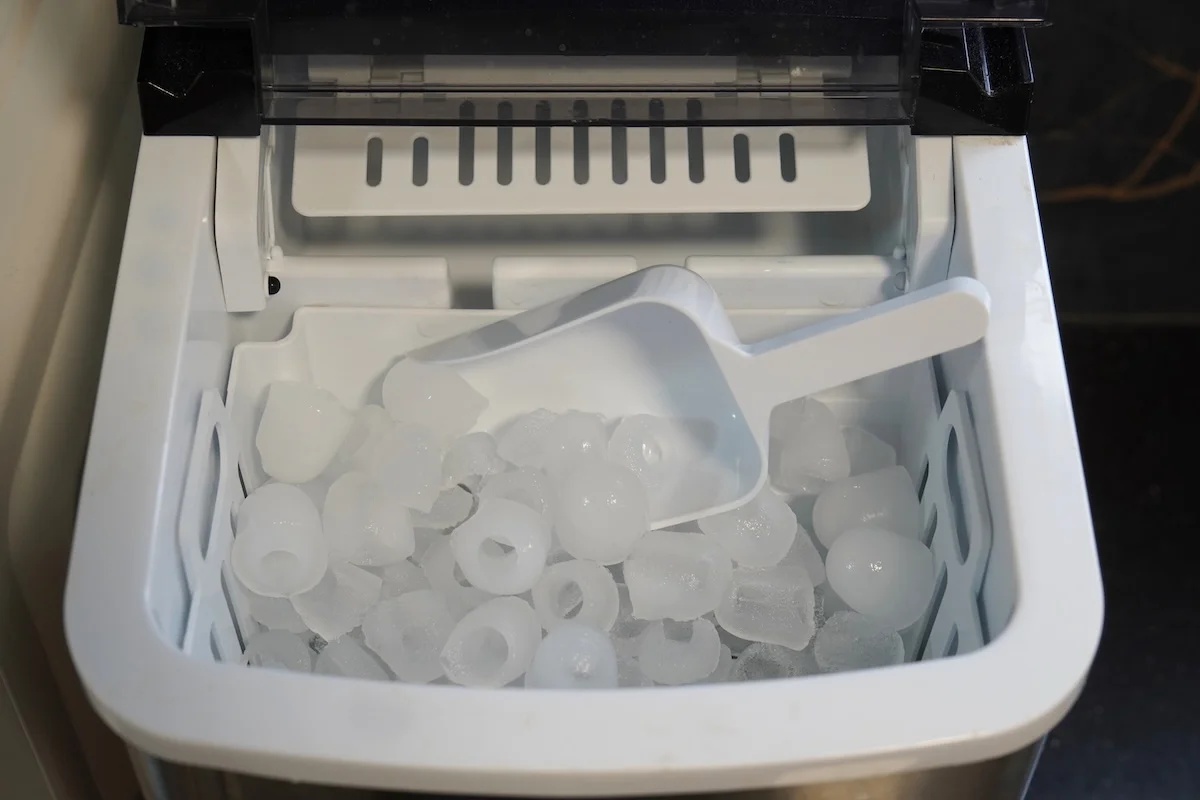
The water supply line runs from your home plumbing to the back of the refrigerator. Because it is often hidden behind appliances, it can develop problems that go unnoticed for months.
Refrigerators are heavy, and they are frequently pulled out for cleaning or moved during renovations. When the unit is pushed back against the wall, the water line can become kinked or pinched. A kink restricts water flow, which may cause slow ice production, partially filled ice trays, or no ice at all. Checking the tubing for sharp bends is one of the simplest diagnostic steps.
Water lines that run near exterior walls or through unheated spaces can freeze during cold weather. Frozen lines block water completely, and the ice maker may stop producing ice without any obvious error. Thawing a frozen line requires care, and it is usually best handled by a professional if the cause is not simple exposure to cold.
Over time, plastic tubing can become brittle, while copper lines can develop pinholes or corrosion. Cracks may leak slowly, which can cause water damage behind the refrigerator before the ice maker symptoms become noticeable. Consequently, any visible moisture around the supply line deserves immediate attention.
Fittings at the valve, the shutoff, and the refrigerator connection can loosen with vibration or thermal changes. Loose connections often produce drips, but they can also allow air into the system, which may interfere with proper filling. Compression fittings that were overtightened during installation can also crack, creating new leaks.
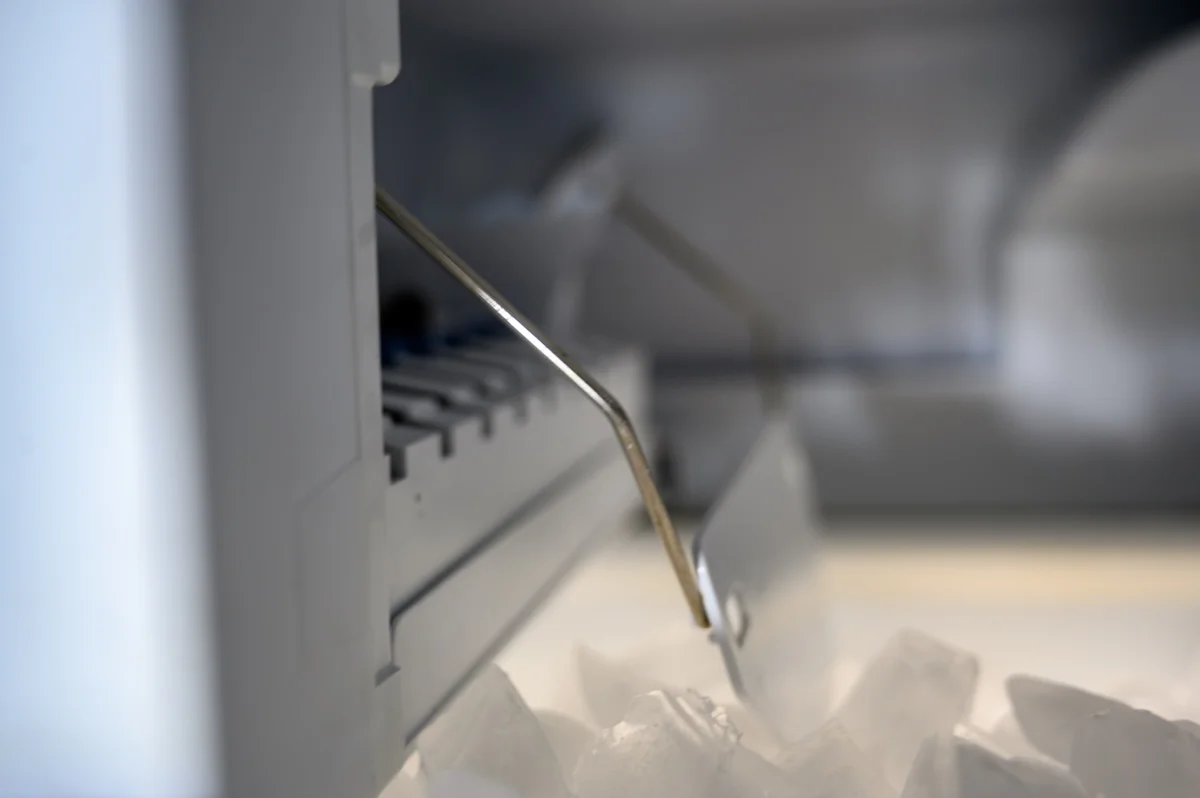
The water inlet valve controls when water enters the refrigerator. It opens when the ice maker signals a fill cycle and closes when the ice mold is full. Because it operates electronically, it can fail mechanically or electrically.
Most inlet valves include a small mesh screen that catches sediment from the household supply. Over months or years, this screen can collect debris, minerals, and rust particles. A clogged screen restricts flow dramatically, so the ice maker fills slowly or not at all.
The valve’s solenoid is an electromagnetic coil that opens the valve when energized. If the coil burns out or loses resistance, the valve cannot open, and no water reaches the ice maker. A failed coil often produces no sound when the fill cycle should begin, which helps distinguish it from other problems.
Mineral deposits and debris can prevent the valve plunger from moving freely. A stuck valve may remain partly open, causing a slow leak into the ice maker, or it may remain closed entirely. Either condition disrupts ice production and can lead to overflow or water damage.
Valve wiring can loosen, corrode, or break at the connectors. An electrical fault may prevent the control board from sending the signal to open the valve. Intermittent ice production, where the ice maker sometimes works and sometimes does not, often points to wiring or connector issues.
Careful observation helps you determine whether the water line, the valve, or the ice maker itself is responsible. Several patterns are especially useful.
Symptoms suggesting a water supply problem:
Symptoms suggesting a valve problem:
Moreover, comparing the ice maker and the water dispenser can be revealing. If the dispenser works normally but the ice maker does not, the problem is more likely in the ice maker assembly, its fill tube, or its control. If neither works, the problem usually lies upstream in the supply line or valve.
Several diagnostic steps are safe for most homeowners. However, always prioritize safety, because water and electricity can be hazardous when combined.
Confirm that the shutoff valve under the nearby sink or behind the refrigerator is fully open. A partially closed valve is a surprisingly common cause of poor water flow. Turn it counterclockwise to open it fully, then check the dispenser again.
Carefully pull the refrigerator out only as far as the water line allows. Look for sharp bends, pinched sections, or areas where the tubing rests against the wall. Gently straighten any kinks, and make sure the line has enough slack to avoid future pinching.
Look at all visible connections for moisture, drips, or mineral crust. A white or green residue around a fitting often indicates a slow leak. Dry the area thoroughly and check again after running a fill cycle.
If your refrigerator has a filter, a clogged cartridge can reduce flow substantially. Replace the filter according to the manufacturer’s schedule, which is commonly every six months. Some models require the ice maker to be turned off during replacement, so consult the owner’s manual before beginning.
Turn the ice maker on, or wait for it to begin a fill cycle. Listen near the back of the refrigerator for the characteristic click and flow of the valve opening. Silence during a cycle that should be filling suggests a valve or electrical issue.
Before examining wiring or the valve connector, unplug the refrigerator or turn off the circuit breaker. Never touch electrical connectors while the unit is energized, and never assume a switch alone removes power.
Some water line and valve problems are beyond safe DIY repair. Contact a qualified technician when you encounter any of the following:
Replacing a water inlet valve or repairing a supply line involves shutting off water, managing residual pressure, and reconnecting fittings without creating new leaks. Professional technicians carry replacement valves, tubing, and fittings, and they verify the repair by running several fill cycles and checking for drips.
Understanding common repairs helps you evaluate estimates. Depending on the cause, a technician may:
Costs vary widely depending on the refrigerator model, the part required, and whether the valve is accessible. Because the valve is often located behind the unit, the labor involved can be more significant than the part itself.
Preventive care reduces the likelihood of ice maker failures. While some problems cannot be avoided, several habits make a difference:
Moreover, keep the refrigerator level. An unlevel unit can put strain on connections and may cause the ice maker to misalign with its fill tube.
Older refrigerators sometimes develop multiple water-related problems at once. If you are replacing a valve for the second or third time, or if the ice maker assembly is also failing, replacement of the entire appliance may be more economical. A technician can estimate repair costs, weigh them against the age and efficiency of the unit, and offer a recommendation based on your situation.
A refrigerator ice maker not working is often a symptom of a water line or valve problem rather than a failed ice maker. Kinked tubing, frozen lines, clogged valve screens, failed solenoids, and electrical connection faults all interrupt the water supply that ice production depends on. By checking the shutoff valve, inspecting the supply line, replacing the filter, and listening for valve operation, you can narrow the problem before calling for help. When the cause involves leaks, electrical faults, or valve replacement, professional service protects both your appliance and your home.
At Gulf Coast Appliances, our certified technicians diagnose water line and valve problems on all major refrigerator brands. We trace the water path from the supply to the ice maker, identify the failed component, and complete repairs with quality parts. If your ice maker has stopped producing ice, contact Gulf Coast Appliances today to schedule a diagnostic visit and restore reliable ice production.